Embassies do not close out of precaution. They close when the risk calculation exceeds the value of presence — and when the government operating them refuses to say publicly what the closure admits in silence. The American announcement of an indefinite suspension of services at the Beirut embassy, including emergency consular assistance, is the diplomatic formalization of a conclusion Washington had been postponing: Lebanon has returned to being a theater of war, and the United States finds itself, in different ways, on every side of it.
Fifty-two people are dead. A hundred and fifty-four wounded. The numbers from the Lebanese Ministry of Health describe the immediate scale of Israeli strikes against Hezbollah positions. But the casualty count, however grave, is only the most visible layer of an escalation operating across multiple dimensions at once.
What “regional tensions” means when Washington reaches for the euphemism
The American statement cited “regional tensions” as the justification for the closure. The phrase is a classic of emergency diplomatic language — vague enough to formally accuse no one, precise enough to signal that something structural has shifted. When the United States uses “regional tensions” to close an embassy, it is saying, in code, that it no longer trusts any local actor to guarantee the safety of diplomatic personnel — not even its closest allies.
In Lebanon’s case, the euphemism carries a particular irony: the strikes that triggered the closure are being carried out by Israel, Washington’s most unconditional ally in the Middle East. The United States is closing its embassy in a country being bombed by a country it arms, finances and shields at the UN Security Council. The geometry is too uncomfortable to state plainly — hence the need for the euphemism.
Israel, Hezbollah and the logic of an escalation nobody wants to name
Israeli strikes against Hezbollah positions in Lebanon are not isolated episodes. They form part of a sequence of operations that intensified following Israeli offensives against Iranian targets — expanding the conflict beyond Lebanon’s southern border and placing Tehran in a position where it must either respond or accept a symbolic strategic defeat of historic proportions.
Hezbollah, militarily weakened after the severe blows it absorbed in 2024, faces a crossroads: retaliate and confront an Israeli war machine in a state of full mobilization; or hold back and admit, to its own base and to Iran, that the so-called axis of resistance has been effectively degraded. Neither option is good. Both keep the escalation in motion.
Tehran, Trump and the rhetoric that manufactures its own facts
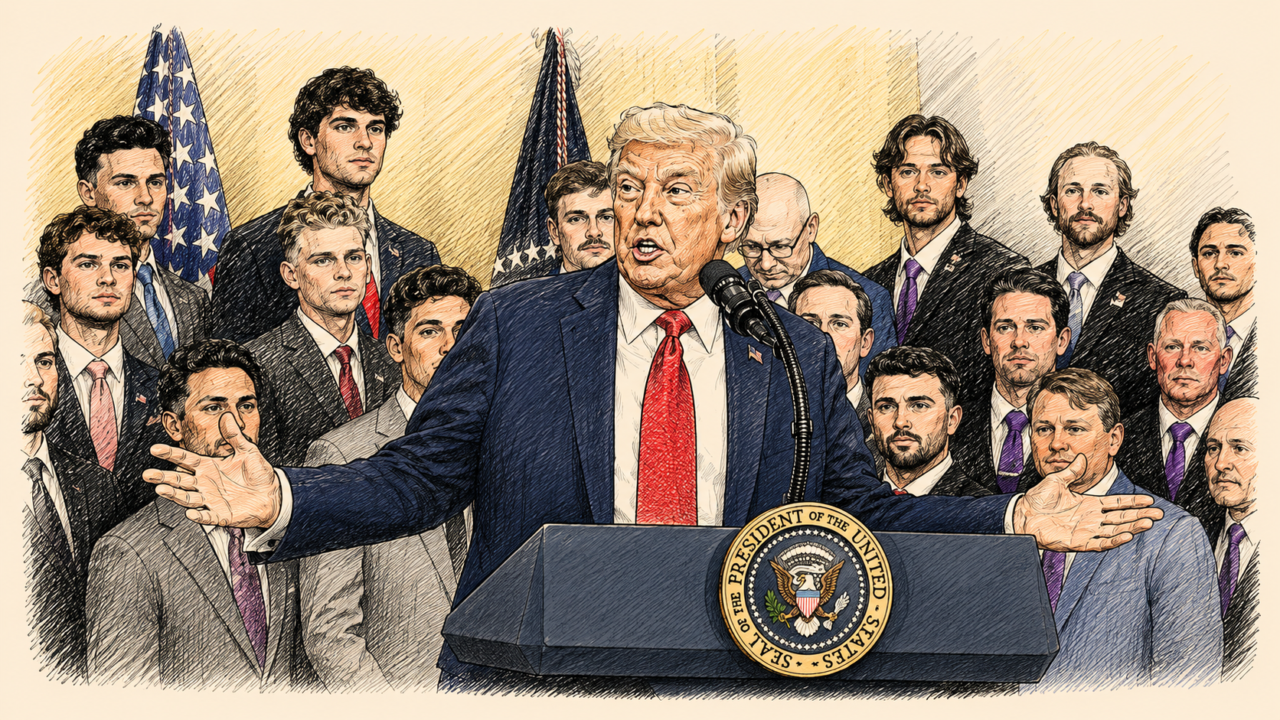
Iran’s promise of retaliation and Donald Trump’s threat to respond with “force never seen before” form the most dangerous pairing in the current moment — not because either is necessarily sincere, but because escalatory rhetoric has a specific property: it generates domestic pressure that makes backing down politically costly for both sides.
Trump, who returned to the White House on a platform of force and unpredictability, cannot absorb an Iranian challenge without paying a domestic political price. Khamenei, governing a regime under chronic economic pressure and rising social tension, cannot absorb Israeli strikes on Iranian targets without a response visible enough for his domestic audience. Both leaders are trapped in an audience logic that pushes them toward confrontation, regardless of what either calculates in private.
Lebanon as stage and as victim
Beirut is a city that has learned, across decades, to exist between powers that use it as a chessboard without asking permission. The port explosion in 2020 destroyed part of the city and the state never fully reconstituted itself. Lebanon’s political infrastructure — always fragile, always hostage to impossible sectarian balances — has no capacity to influence the events unfolding on its own territory.
The closure of the American embassy is, in this sense, one more episode in a long history of abandonment. Washington will be absent from its consular windows at precisely the moment Lebanese citizens most need exit routes. The suspension of emergency services is not a bureaucratic footnote — it is the practical translation of a hierarchy of priorities that places the safety of American diplomatic personnel above any obligation to the civilian population dependent on those services.
What the closure anticipates — and what no one wants to admit
Embassies that close indefinitely rarely reopen into the same context that closed them. The implicit message of the American announcement is that Washington sees no stabilization on the immediate horizon that would justify a return. This means the United States is operating from a baseline scenario in which the escalation continues — and likely deepens.
The question that international diplomacy has not yet formulated publicly, but which the Beirut closure raises with growing urgency, is this: how far does Israel intend to go, and what are the United States prepared to do — or to stop doing — to prevent the answer from dragging the region into a conflict that none of the powers involved has a plan to end?