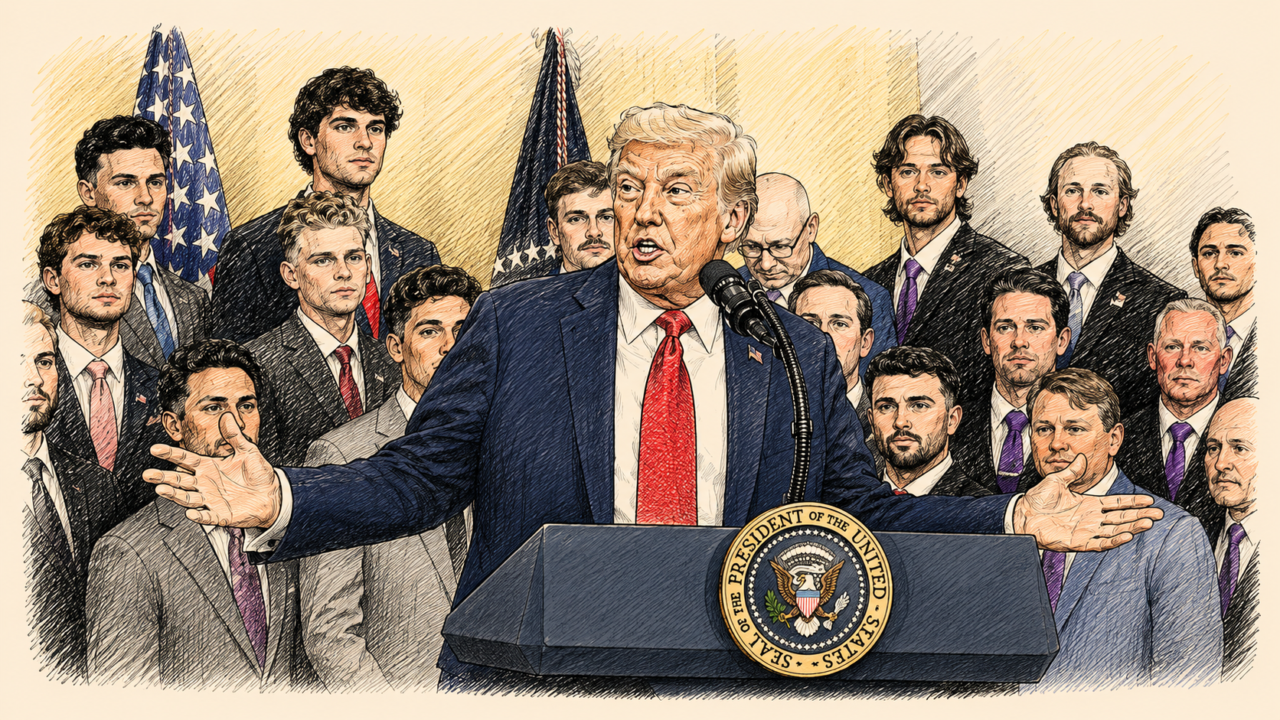
Donald Trump’s geopolitics is driven not by ideology, but by assets. After consolidating unprecedented influence over Venezuela’s oil reserves—under the pretext of financially suffocating the Maduro regime—the American president is now executing the same script in the Middle East. The announcement of a possible ground operation with Delta Force to “secure” Iran’s stockpile of 450 kg of enriched uranium is the final chapter of a doctrine that replaces diplomacy with material possession. For Trump, Iranian uranium is not just a threat; it is a war spoil that must be removed or neutralized under American custody, transforming nuclear disarmament into a seizure of technological and mineral assets.
The parallel between Caracas and Tehran is evident: in both cases, direct intervention occurs in nations that possess the world’s largest reserves of critical commodities (oil and atomic potential). However, Washington’s “democratic idealism” finds a curious geographic and geological limit. While Trump threatens to decimate Iran and controls Venezuela’s fuel pumps, brutal dictatorships in sub-Saharan Africa—in countries devoid of significant mineral wealth or energy relevance—remain untouched. Autocratic regimes that do not offer uranium, oil, or rare metals do not seem to qualify for American “liberation,” raising an ethical question: is Trump’s fight against tyranny, or just against tyrants sitting on treasure?
This selectivity exposes what critics call “Result-Oriented Imperialism.” If the goal were purely global security and the end of dictatorships, the intervention map of CENTCOM and AFRICOM would be much more balanced. By focusing on Isfahan’s uranium after securing Orinoco’s oil, Trump signals that the cost of an American boot on the ground is only paid if there is something valuable to carry back. The White House’s silence on humanitarian crises in poor African dictatorships is the loudest cry that, in the Trump era, “peace” is a commercial transaction and freedom has a market price.