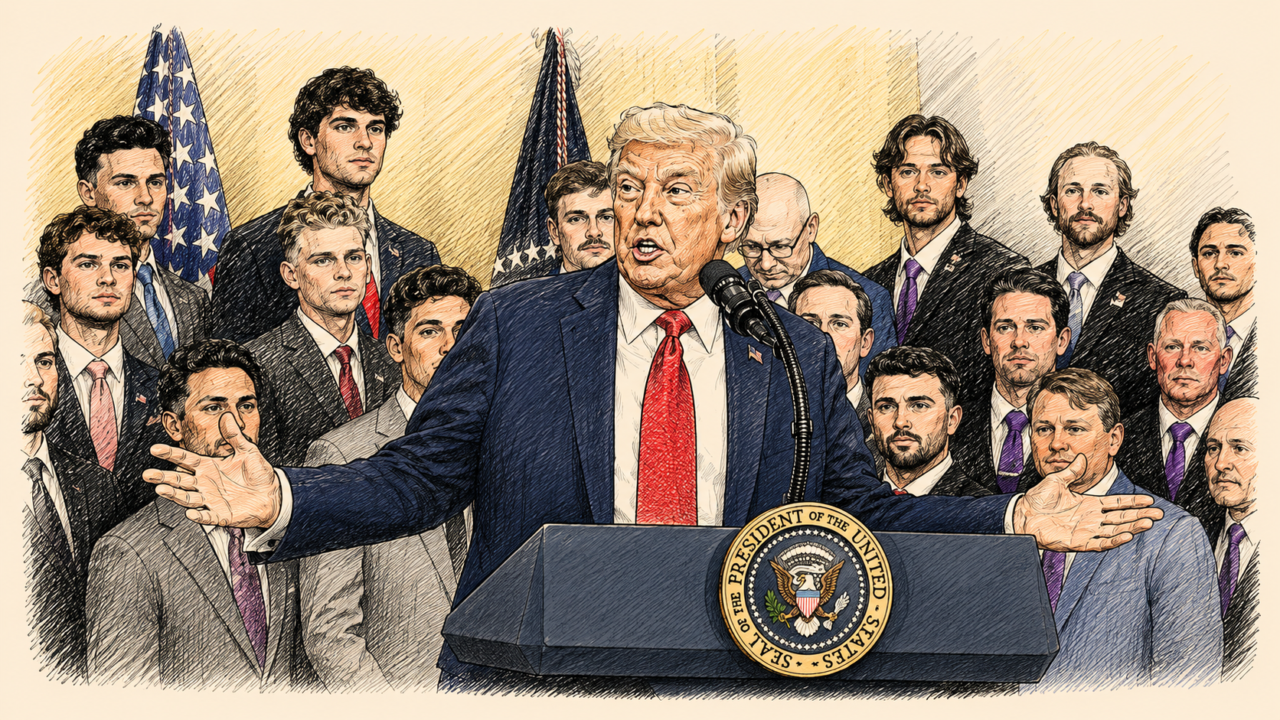
President Donald Trump ordered the postponement of airstrikes against Iran’s energy infrastructure for five days, backing away from a Monday deadline after claiming “very good and productive” progress in diplomatic negotiations.
The temporary suspension comes under the shadow of an Iranian threat of “irreversible destruction” to power plants and water systems across the Middle East. Trump’s retreat, announced via Truth Social, attempts to frame an imminent military escalation as a negotiating triumph, despite Tehran’s official denial of any direct dialogue or mediation.
The standoff over the Strait of Hormuz puts 20% of the global energy supply at risk, forcing mediators like Oman into a race against time to prevent a worldwide economic collapse.
Suspension of the 48-hour ultimatum
Donald Trump’s order to the Department of Defense to halt planned airstrikes breaks a cycle of tension that reached its peak last Saturday. The President had set a strict deadline for Iran to reopen the Strait of Hormuz or face the destruction of its energy grid. The new five-day window is presented by the White House as a gesture of goodwill conditioned on the “success” of ongoing talks.
Trump described recent conversations with unidentified emissaries as “productive,” suggesting that a total resolution of hostilities in the Middle East could be near. However, the Pentagon remains on high alert, indicating the pause is operational and can be revoked at any moment if oil flow is not normalized.
Threat of water and energy collapse in the Gulf
Washington’s strategic retreat coincides with Tehran’s explicit warning regarding the consequences of an attack on its territory. The Iranian government was clear: any bombing of its power plants would result in coordinated strikes against water desalination plants and electrical infrastructure in neighboring countries hosting US bases.
This “mutually assured destruction” of civilian infrastructure has significantly raised the political cost of intervention. Regional US allies, who depend almost exclusively on desalination for drinking water, reportedly pressured Washington to seek a diplomatic exit to avoid an unprecedented humanitarian and economic crisis in the Persian Gulf.
A conflict of diplomatic narratives
While Trump projects the image of a dealmaker, the Iranian state agency Fars has denied the existence of communication channels. Citing government sources, the agency claimed the American president backed down “out of fear” of the real consequences of Iranian retaliation against economic and industrial targets with US participation in the region.
This divergence of versions is common in acute crises where each side seeks to save face for their domestic audience. For international observers, Tehran’s silence regarding the “good talks” cited by Trump suggests that dialogue, if it exists, is occurring through third parties under absolute secrecy, or that Washington is buying time to reassess the risks of the operation.
Oman as the final line of mediation
Oman’s Foreign Minister, Badr Albusaidi, has emerged as a central figure in the pacification efforts. Oman, which historically acts as the “Switzerland of the Middle East,” warned that the maximum pressure strategy adopted by the US and Israel is a “grave miscalculation.” Albusaidi argues that security in the Strait of Hormuz will not be achieved through military force, but through mutual non-aggression guarantees.
The Omani Chancellor highlighted that the economic impacts of the war are already being felt globally and that the destruction of basic infrastructure would leave no winners. The activation of this diplomatic channel is seen as the primary technical reason for the extension granted by Trump.
Energy markets under watch
The five-day truce brought momentary relief to oil and Liquefied Natural Gas (LNG) prices, which saw high volatility at the start of the trading session. The Strait of Hormuz is the vital artery through which one-fifth of global consumption passes; any sign of real hostility in the channel triggers energy inflation that affects everything from US transport to domestic prices in the Global South.
Market analysts remain skeptical of the retreat’s durability. Without a formal commitment from Iran to clear the maritime route, the five days may serve only for both sides to reposition military assets for an even more severe confrontation by the end of the week.
Is Trump’s retreat the beginning of a real peace, or just the time needed for Iran to prepare its defenses and the US to recalibrate its targets?