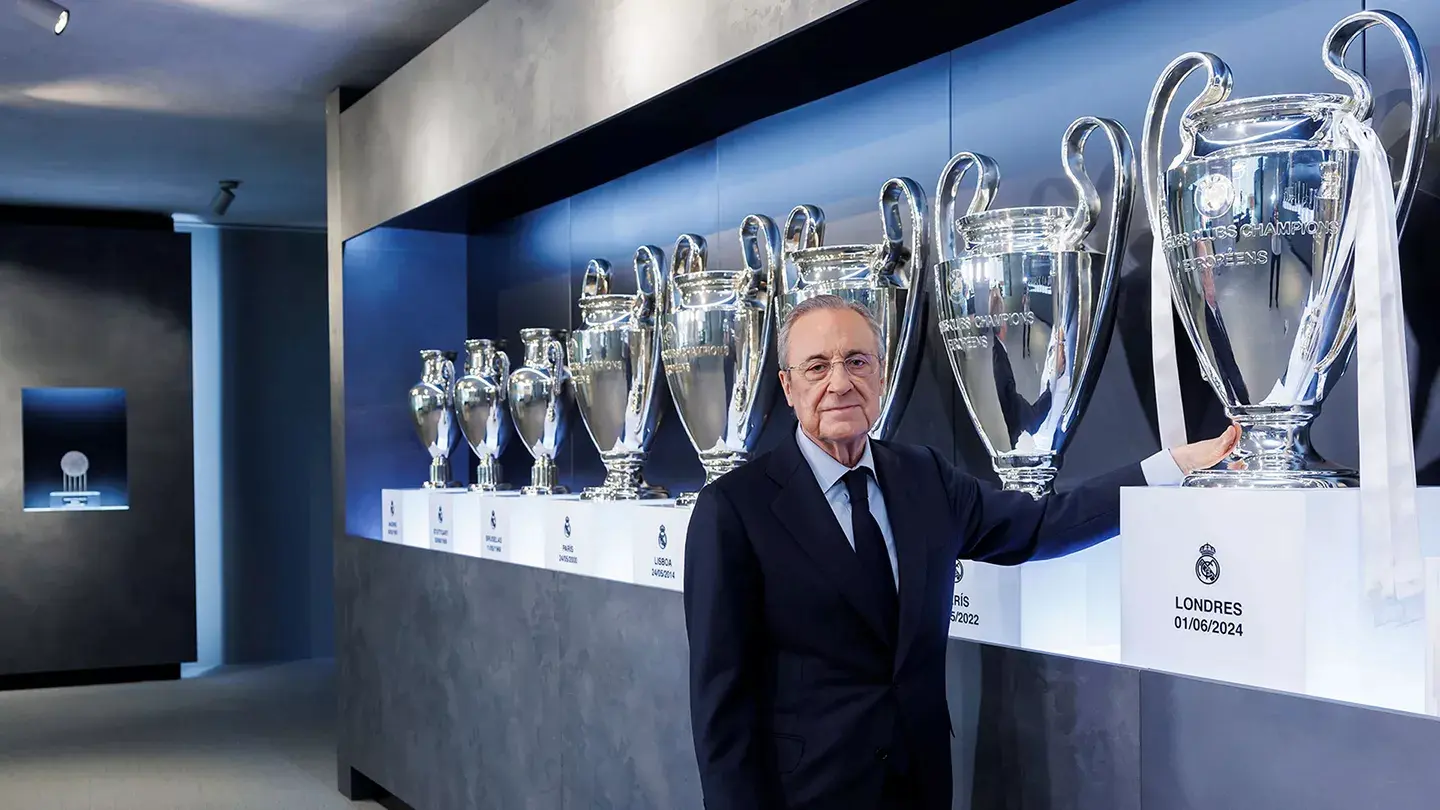

Real Madrid enters a defining week for its institutional and sporting trajectory. Current president Florentino Perez announced he will unveil the club’s first major signing for the 2026/27 season this Thursday, aiming to rehabilitate his administration’s image following a recent cycle that fell short of fan expectations.
Perez’s communication strategy is designed to shield his tenure ahead of next Tuesday’s elections. The ballot pits his established project, focused on acquiring global superstars, against the renewal proposal headed by challenger Enrique Riquelme.
The battle for the merengue power
The internal atmosphere at the club reflects the tension typical of election cycles within major sports institutions. The promise of new arrivals, such as Ibrahima Konate and Denzel Dumfries, acts as a tactical move to secure support from voting members, while names like Jose Mourinho are being circulated as potential alternatives for the coaching staff.
- The incumbent president seeks to consolidate votes by maintaining his trademark galactico-style acquisition model.
- Riquelme represents an alternative project that questions current governance and management practices.
- The uncertainty regarding the head coach adds an extra layer of unpredictability to next season’s planning.
Structural consequences on strategic planning
The effectiveness of these maneuvers will depend directly on the ballot results. The transfer market, which already involves multi-billion dollar figures, is effectively being used as a campaign tool. The club’s investment capacity remains at the center of the debate regarding financial sustainability and sporting competitiveness.
The current scenario exposes the fragility of sports projects that rely on electoral instability to define strategic directions. Regardless of the winner, the next president will face the challenge of balancing the demand for immediate titles with the management of operating costs and the necessary overhaul of the squad for the 2026/27 season.