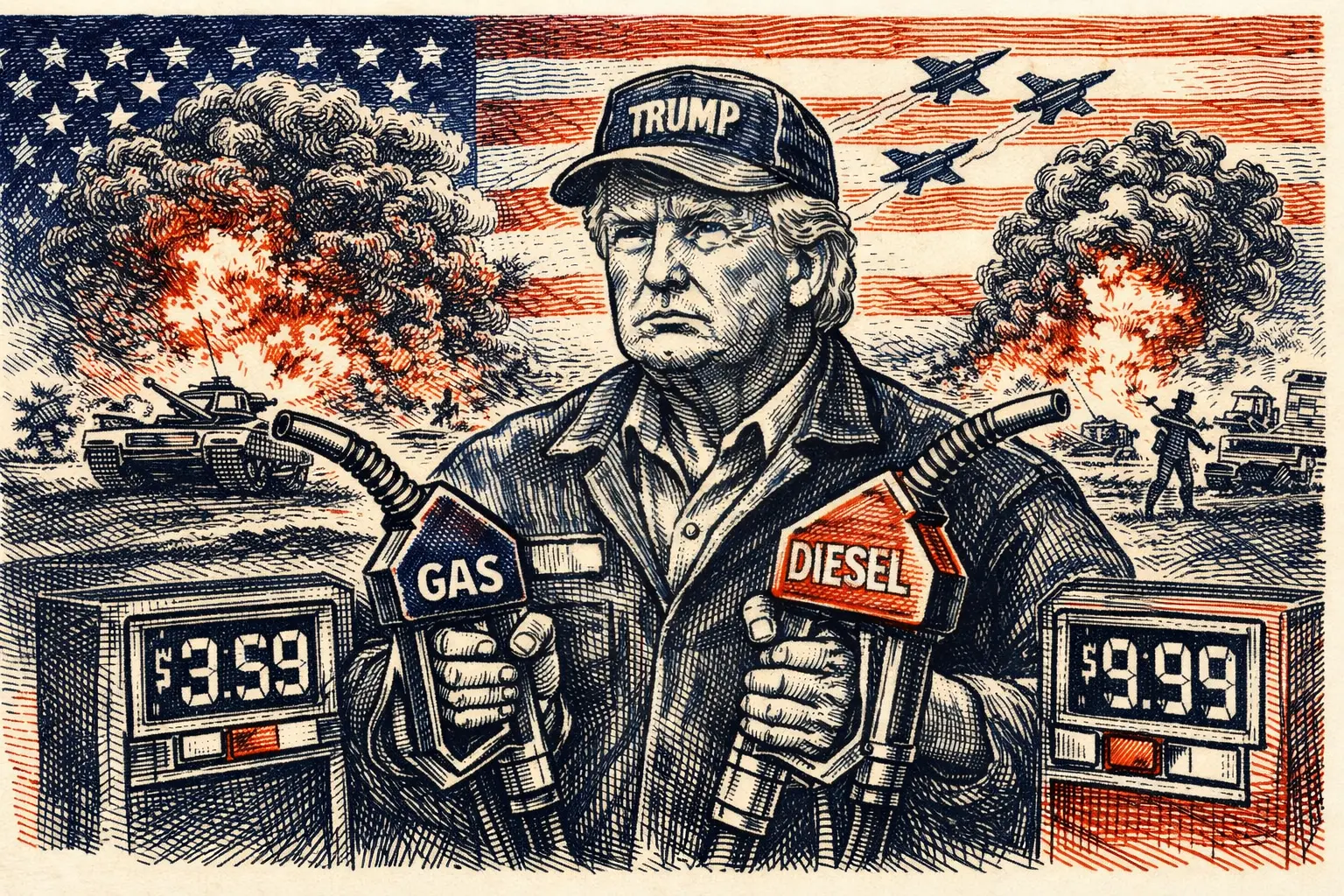

The geopolitical firewall protecting the American consumer from Middle Eastern volatility has collapsed. Following the escalation of hostilities between the US-Israel coalition and Iran, retail fuel prices across the United States surged this week, marking the most aggressive price hike in over two years.
Brent and WTI crude futures both breached the $90 mark, a psychological and economic ceiling that has fundamentally reset the cost of living for millions. While the White House continues to project a posture of military and energy strength, the reality at the gas station tells a story of immediate vulnerability. The national average for regular gasoline hit $3.32 per gallon on Friday—an 11% jump in seven days—while diesel soared to $4.33, its highest point since late 2023.
The Chokepoint Tax
The crisis is defined by the strategic paralysis of the Strait of Hormuz. With the waterway now a de facto combat zone, the global flow of oil has been throttled, forcing international buyers to scramble for American exports. This surge in foreign demand has backfired on the domestic market: as US crude flows overseas to fill the Iranian void, domestic refineries are forced to pay global premium prices, a cost passed directly to the American driver.
For a nation that prides itself on being the world’s top oil producer, the current price shock is a cold reminder that production does not equal protection. In a globalized market, a localized war in the Gulf is a universal tax.
Political Fallout in the Rust Belt and South
The timing could not be more catastrophic for the Republican establishment. In critical battlegrounds like Georgia, the sudden 40-cent-per-gallon jump is more than an economic data point; it is a political liability. For voters in South Fulton and Marietta, the “America First” rhetoric is being measured against the escalating cost of a Ford F-150 fill-up.
President Trump’s recent dismissal of the price hikes—telling Reuters “if they go up, they go up”—suggests a calculated gamble that ideological loyalty will outweigh economic pain. However, as inflation remains the primary concern for the electorate, this fatalism may alienate the very base that returned him to power.
Diesel: The Silent Inflationary Flare
While gasoline dominates the headlines, the 15% surge in diesel prices represents a deeper systemic threat. Diesel is the lifeblood of American logistics, agriculture, and manufacturing. With global inventories already depleted by a harsh winter, the disruption of Middle Eastern supply has removed the final buffer.
From the cost of Midwestern corn to the delivery fees of Amazon packages, the “diesel tax” will ripple through every sector of the US economy within weeks. Market analysts warn that the current trajectory could see gasoline peaking near $3.70 before the summer driving season even begins, as seasonal refinery transitions further tighten the screws on supply.
The Strategy of Attrition
Washington now faces a binary choice: pursue a rapid military de-escalation to reopen the sea lanes or brace for a prolonged period of energy-induced stagflation. The current strategy of containment appears insufficient to calm the commodities market, which is already pricing in a long-term exclusion of Iranian supply.
The “freedom” sought through intervention in the Persian Gulf is currently being financed by the American middle class. As the November midterms approach, the administration’s greatest enemy may not be the IRGC in Tehran, but the digital price boards at gas stations in suburban America.