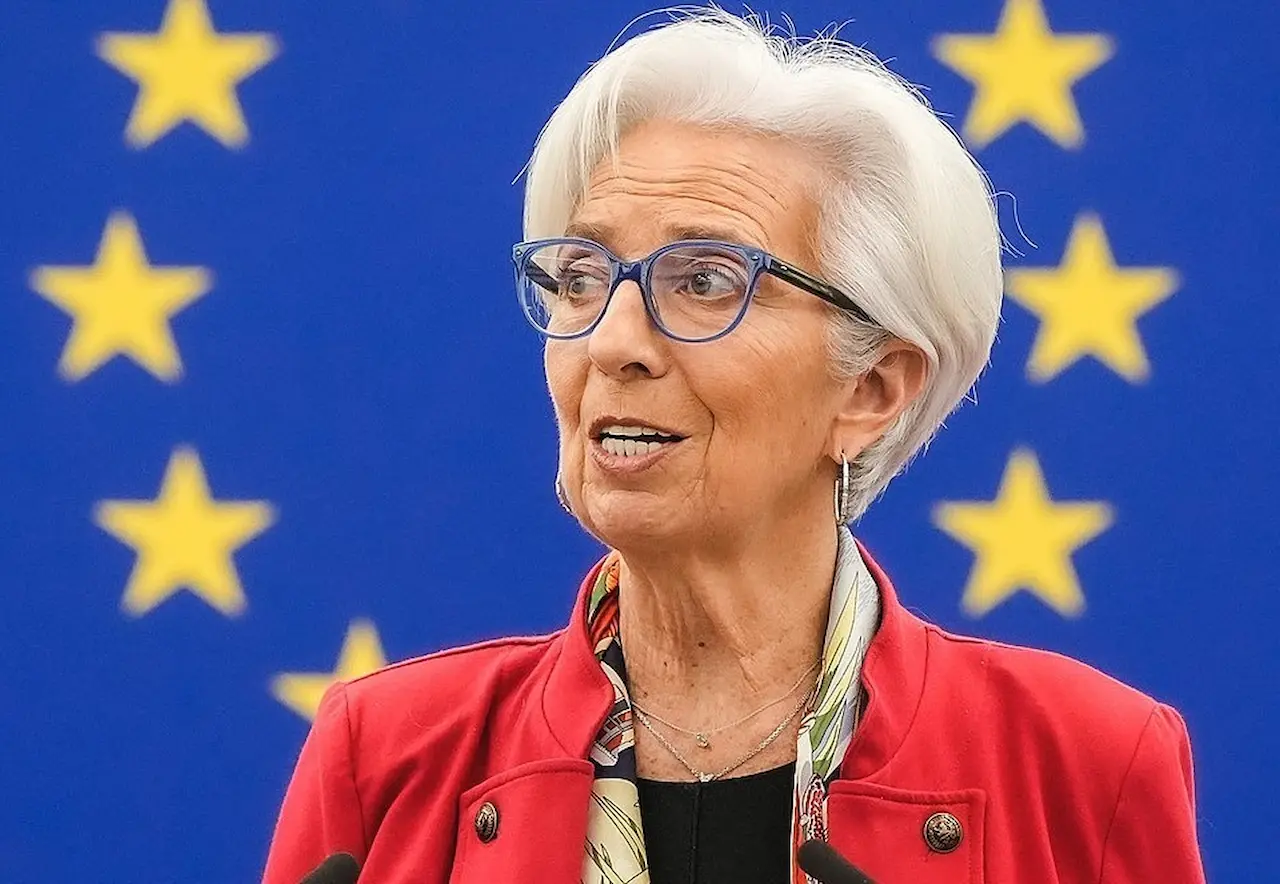

European Central Bank President Christine Lagarde sent a stark warning to global markets this Monday. In an official statement, the top monetary authority of the eurozone described the current geopolitical landscape as a source of unprecedented uncertainty.
The core of the concern lies in the escalating conflicts in the Middle East. According to Lagarde, the volatile and unpredictable nature of these confrontations prevents precise economic modeling for the coming quarters.
This analytical paralysis reflects fears that new shockwaves could hit the European supply chain. The ECB is now operating in a territory where traditional projections seem to lose immediate validity.
The predictability gap
The central difficulty highlighted in Frankfurt is the inability to forecast the behavior of energy prices. Oil and natural gas remain the most dangerous triggers for the bloc’s economy.
Lagarde emphasized that the bank cannot commit to pre-defined paths for rate cuts or hikes. The current strategy is strictly based on reacting to data as it arrives in real-time.
The market, which expected clearer signals for the second half of 2026, received a dose of prudence instead. Visibility is, in the president’s words, at its lowest in decades.
Anatomy of inflationary pressure
Below are the main risk vectors monitored by the European Central Bank:
- Maritime freight costs and alternative trade routes.
- Extreme volatility in natural gas futures contracts.
- Resilience of the European labor market despite the slowdown.
- Long-term inflationary expectations by consumers.
The persistence of these risks keeps ECB directors in a state of constant vigilance. Any miscalculation in monetary tightening could stifle the already fragile growth of powerhouses like Germany and France.
Commitment to the 2% dogma
Even under fire, Lagarde was emphatic in maintaining the medium-term inflation target of 2%. This objective remains the institution’s anchor of credibility amidst external chaos.
The president acknowledged that risks of escalation are real and latent. However, the price stability mandate will not be relaxed due to momentary political pressures.
The technical challenge is balancing the need for price control with the risk of a deep recession. This “tightrope walk” defines monetary management for this 2026 biennium.
Indicators and comparative scenarios
| Impact Variable | Status in April 2026 | Immediate Trend |
| Eurozone Inflation | Above target | Slow stabilization |
| Energy Prices | High volatility | Geopolitical dependence |
| Interest Rates | Restrictive stance | Monthly reassessment |
| GDP Growth | Stagnant | Contraction risk |
Architecture of the economic future
Projections for the year-end suggest that interest rates will remain at high levels for longer than initially anticipated. The ECB sees no room for optimism as long as energy routes remain under threat.
Analysts in Frankfurt suggest the bank may be forced to intervene more aggressively if oil prices cross critical thresholds. Coordination with other central banks, such as the Fed, has become vital.
Lagarde concluded her speech by reinforcing institutional resilience. The European bloc, while vulnerable to external shocks, seeks to strengthen its strategic autonomy to prevent uncertainty from becoming the new permanent norm.