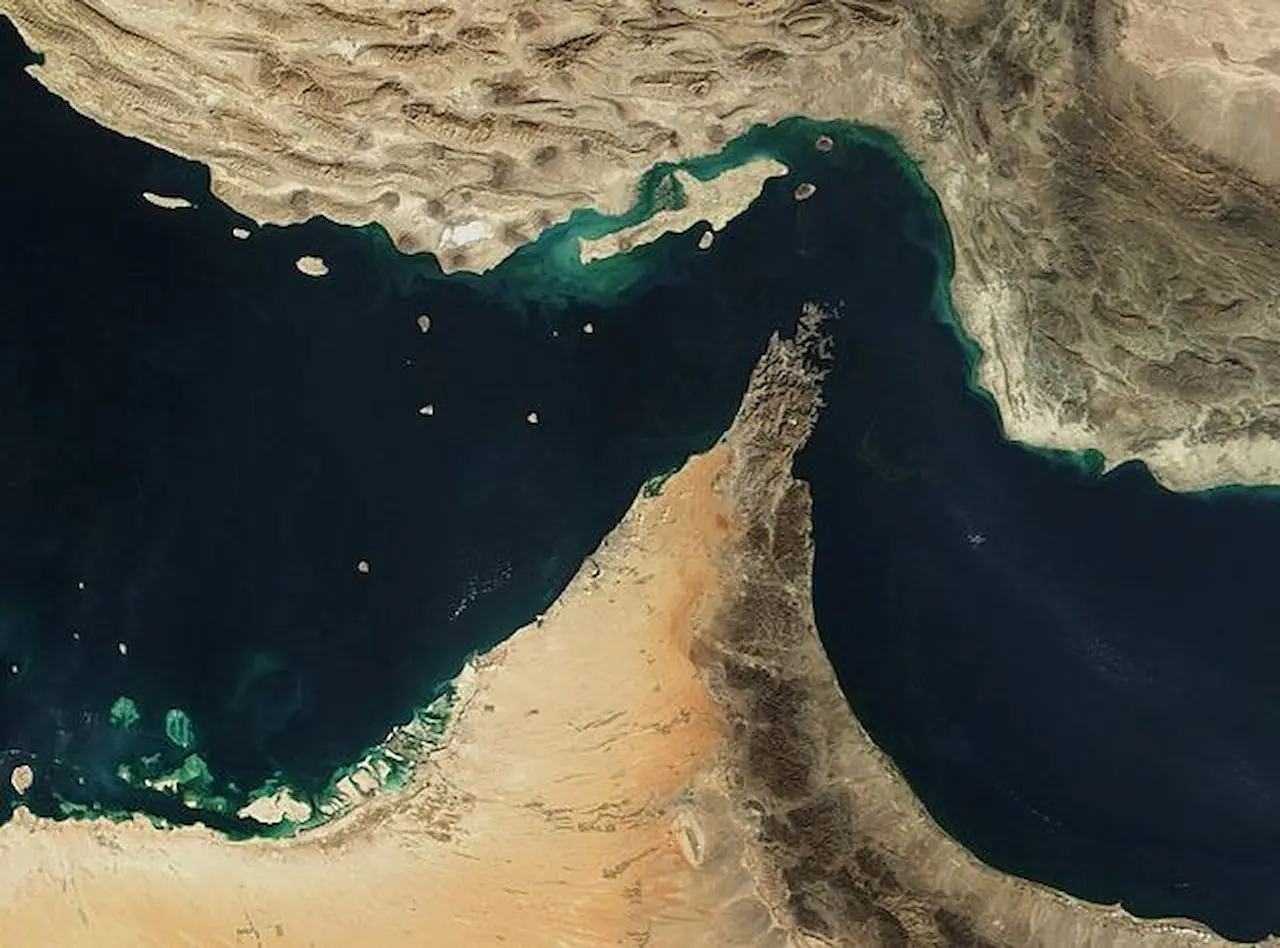

The Tasnim news agency, closely affiliated with Iran’s Revolutionary Guard, has publicly advocated for the government in Tehran to impose taxes and demand annual licenses from foreign companies operating submarine fiber-optic cables in the Strait of Hormuz. The proposal, endorsed by the Fars news agency, emerges amid escalating military tensions with the United States and Israel, threatening a crucial corridor that handles global data traffic between Asia, the Persian Gulf, and Europe. Digital security analysts warn that the move could serve as a pretext for traffic monitoring and the choking of international financial networks, such as Swift.
The Persian Gulf’s digital bottleneck
The Strait of Hormuz is already established as the most sensitive geopolitical chokepoint for the world’s oil supply, but its relevance to the intangible economy remains largely invisible to most markets.
Beneath the waters patrolled by warships lie dozens of fiber-optic strands responsible for high-speed connectivity between emerging and developed economies.
The push by Iranian state agencies signals a tactical shift from Tehran, which seeks to convert its privileged geographical position into a tool for financial leverage and digital sovereignty.
Justifications presented by state media focus on territorial sovereignty and financial compensation for maintaining security in the region.
However, the history of friction in the area suggests that requiring environmental permits and operating licenses will function as a bureaucratic barrier to preventive network maintenance by international consortia.
Systemic impact on global markets
Network infrastructure experts point out that any regulatory friction or delay in repairing damaged cables could trigger a cascade effect across global data centers.
Slower transaction processing times or rerouting data traffic through longer terrestrial paths would inevitably raise operational costs for major technology corporations.
- Financial risk: Potential delays in cross-border banking settlements and high-frequency trading.
- Physical vulnerability: Increased difficulty for international repair vessels to access the Iranian exclusive economic zone.
- Data surveillance: Concerns that the enforcement of infrastructure sovereignty could result in data mirroring by Tehran’s military intelligence.
Mapping the infrastructure at risk
The core assets affected by Iran’s unilateral regulatory proposal are detailed below:
| Affected Asset | Impacted Sector | Immediate Consequence |
| Fiber-Optic Cables | Global telecommunications | Increased latency between Asia and Europe |
| Swift System | International banking | Delays in high-frequency financial transactions |
| Internet Consortia | Foreign Big Tech firms | Additional operational costs from annual licensing fees |
The horizon outlined by the Revolutionary Guard’s rhetoric puts telecommunications companies on high alert.
The chronic reliance on submarine routes concentrated in geographical chokepoints exposes the fragile architecture of the global internet when confronted with national sovereignty crises.