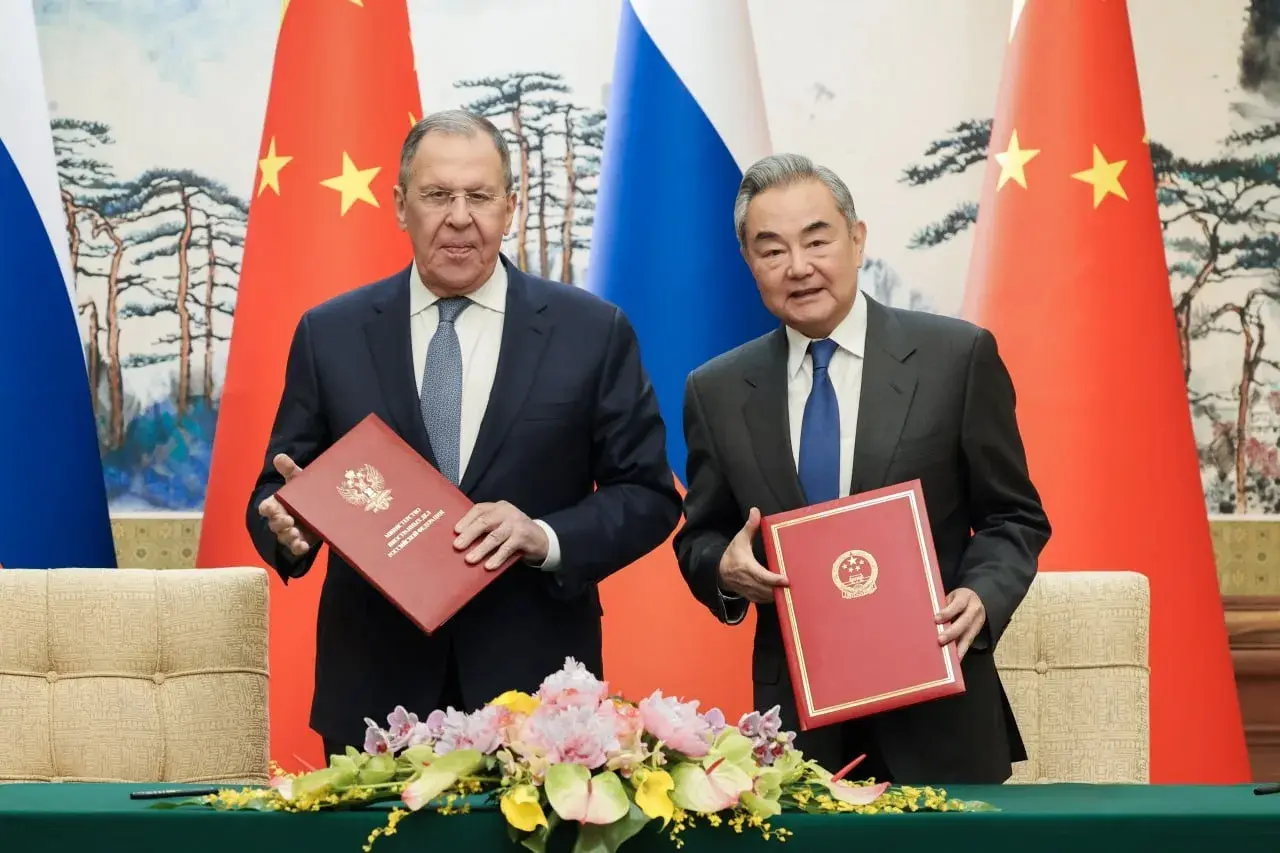

The geopolitical chessboard of 2026 has just moved heavy pieces across the Caribbean. In a high-level meeting in Beijing, the governments of Russia and China reaffirmed what Washington feared most: an unbreakable alliance to keep Cuba breathing. Russian Foreign Minister Sergey Lavrov and his Chinese counterpart, Wang Yi, did not merely pledge diplomatic support; they delivered exactly what the island needs to stem its energy crisis: oil.
Moscow has already dispatched the first vessel carrying 100,000 tons of fuel, a vital lifeline for a nation suffering from chronic blackouts and a blockade that has lasted decades. Lavrov, known for his sharp rhetoric, spared no adjectives as he demanded that the United States abandon what he called a policy of “colonial oppression” against sovereign nations.
The Global South Against Hegemony
Lavrov’s state visit to China goes beyond solidarity with Havana. It consolidates a front seeking to erode U.S. influence in the Global South. According to the Xinhua agency, the order of the day is to restore the authority of the UN and promote multilateralism, using blocs such as BRICS and the Shanghai Cooperation Organization as tools for a power balance.
Chinese President Xi Jinping reinforced the need for “even closer and stronger strategic coordination.” For Beijing and Moscow, supporting Cuba and Venezuela is not merely ideological charity, but a strategy of proximity and complementarity to protect their own legitimate interests in the face of “changes unseen in a century.”
Chain of Crises
The international landscape was described by Lavrov as a terrain of “severe trials.” The agenda in Beijing touched upon tensions in the Middle East, the Ukrainian crisis, and instability in Latin America. By shielding Cuba, Russia and China are sending a clear message: the isolation attempted by Washington has systematically failed.
While Havana resists under the weight of sanctions, Sino-Russian support ensures that the island remains a strategic enclave in a world order that Beijing classifies as “fairer and more reasonable.” For the Diário Carioca, what we see in Beijing is the final burial of the Monroe Doctrine under the weight of Russian oil barrels and Chinese credit.