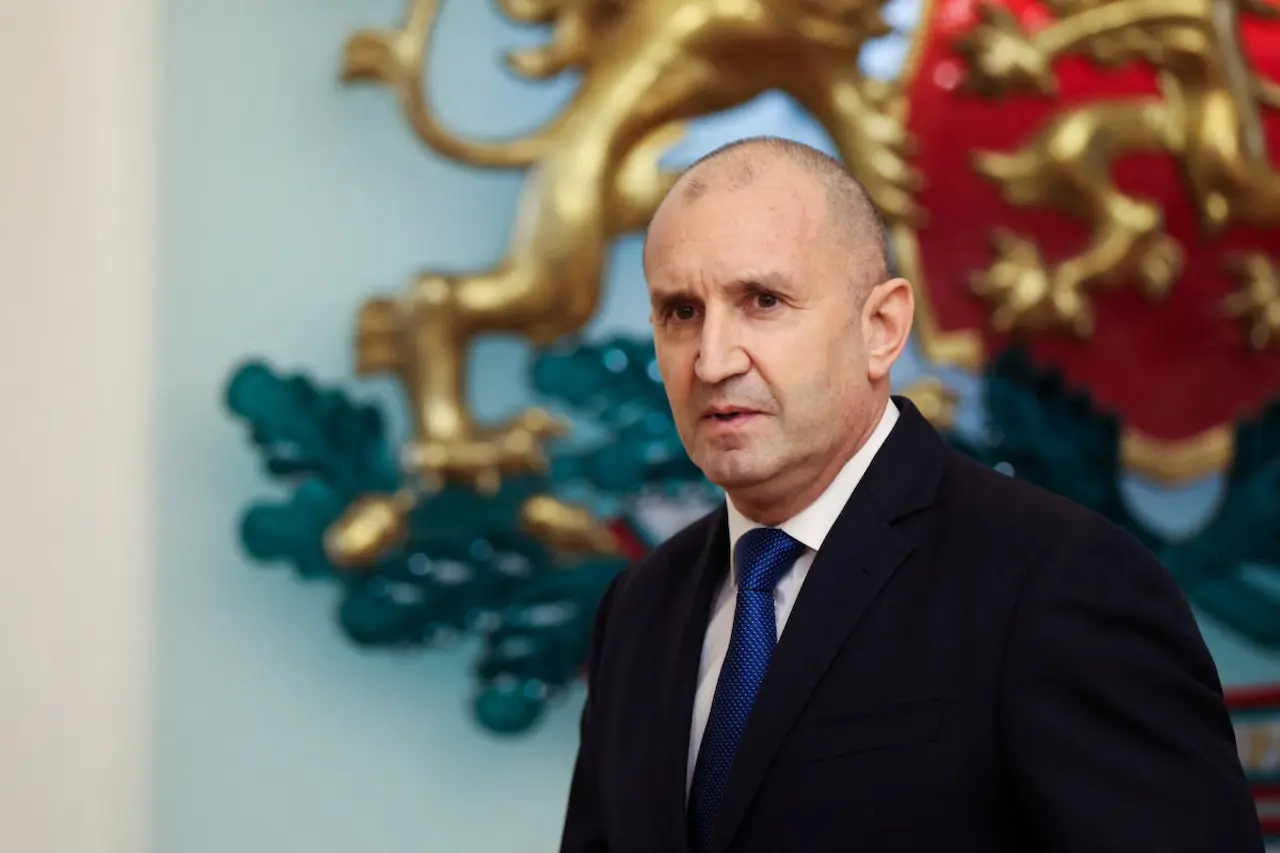

Bulgaria closed a chronic cycle of instability this Sunday only to embrace uncertainty of continental proportions. Exit polls and partial counts confirm a landslide victory for the Bulgaria Progressive (PB) coalition. Led by former president Rumen Radev, the group captured the discontent of a nation exhausted by eight elections in five years.
The result is not merely a change of names in Sofia’s power corridors. It represents the rise of a force that openly challenges the Western consensus on Ukraine and European monetary integration. Radev, a former fighter pilot, now transitions from the presidency to the epicenter of the Executive with a sovereignist nationalist agenda.
The lead of a nation in trance
Data indicates that Bulgaria Progressive achieved an advantage that stifles traditional parties. The liberal PP-DB and the conservative GERB, led by Boyko Borissov, were relegated to secondary roles in the new parliamentary order. Turnout exceeded 45%, a sign that the electorate sought a definitive exit from the political impasse.
Radev successfully channeled the fury against systemic corruption that tainted previous administrations. His narrative fused the fight against local elites with a skeptical rhetoric regarding the euro. For many Bulgarians, the introduction of the single currency in early 2026 became the symbol of a loss of economic autonomy.
Moscow’s shadow over the Danube
Rumen Radev’s trajectory is marked by a calculated ambiguity toward the Kremlin. During his presidential term, he systematically opposed sending weapons to Kyiv, describing Crimea as “de facto Russian territory.” This stance resonates with a significant portion of the population that maintains historical and cultural ties with Russia.
International analysts are already comparing Radev to figures like Hungary’s Viktor Orbán or Slovakia’s Robert Fico. His victory signals the creation of a resistance bloc within the European Union against common defense policies. Sofia’s isolationism could paralyze crucial decisions in Brussels in the coming months.
Behind the scenes and the coalition chess
Despite the significant victory, the path to governability remains mined by cross-vetoes. Bulgaria Progressive is expected to win between 10 and 12 seats fewer than needed for an absolute majority. This forces Radev to seek allies in a fragmented and hostile political spectrum.
The leader has already ruled out any dialogue with GERB and the Movement for Rights and Freedoms (DPS). He labels the leadership of these parties as representatives of a “toxic oligarchy” that needs to be eradicated. The alternative falls on the Socialist Party and, eventually, the ultra-nationalist Revival party.
Alliances and parliamentary hurdles
- Bulgarian Socialist Party: Alignment on social agendas, but differences over the pace of state reforms.
- Revival: Convergence in anti-EU rhetoric, but considered a high-reputational risk ally abroad.
- PP-DB: Frontal opposition to the pro-Russia shift, making a composition unlikely under Radev’s current command.
Tactical impact and financial isolation
The Bulgarian economy now faces the challenge of convincing investors that the new administration will maintain fiscal discipline. Radev’s resistance to the euro could lead to a contraction in foreign capital flow. The market fears that nationalist rhetoric may mask a setback in the structural reforms required by the OECD.
In the field of defense, Bulgaria’s position in NATO becomes a piece of instability on the eastern flank. As the country hosts critical monitoring infrastructure, any tactical distancing from Washington will be seen as a vulnerability. Bulgarian diplomacy will have to balance electoral promises with the reality of international treaties.
2026 Election Indicators and Projections
| Party/Coalition | Vote Projection | Geopolitical Trend |
| Bulgaria Progressive (PB) | 43.85% | Nationalist / Pro-Russia |
| PP-DB (Liberals) | 14.75% | Pro-Western / Eurocentric |
| GERB (Conservatives) | 12.41% | Traditional Center-Right |
| Socialist Party | 8.20% | Center-Left |
| Revival | 7.50% | Ultra-nationalist / Anti-EU |
Future projection and the risk of paralysis
The scenario for the second half of 2026 points to a government of “armed peace.” Radev will have the strength to initiate changes but will be constantly under siege by an opposition that controls key sectors of the judiciary and independent media. The promised stability may be ephemeral if the economy does not respond positively to the change in command.
If he fails to form a cohesive coalition within 30 days, Bulgaria could face new elections, deepening democratic fatigue. The world watches to see if Sofia will be the next domino to fall toward a neutrality that favors Vladimir Putin’s interests in Eastern Europe. The former fighter pilot has never faced turbulence as severe as what awaits him in the prime minister’s office.