
The Anatomy of a Mediterranean Crisis
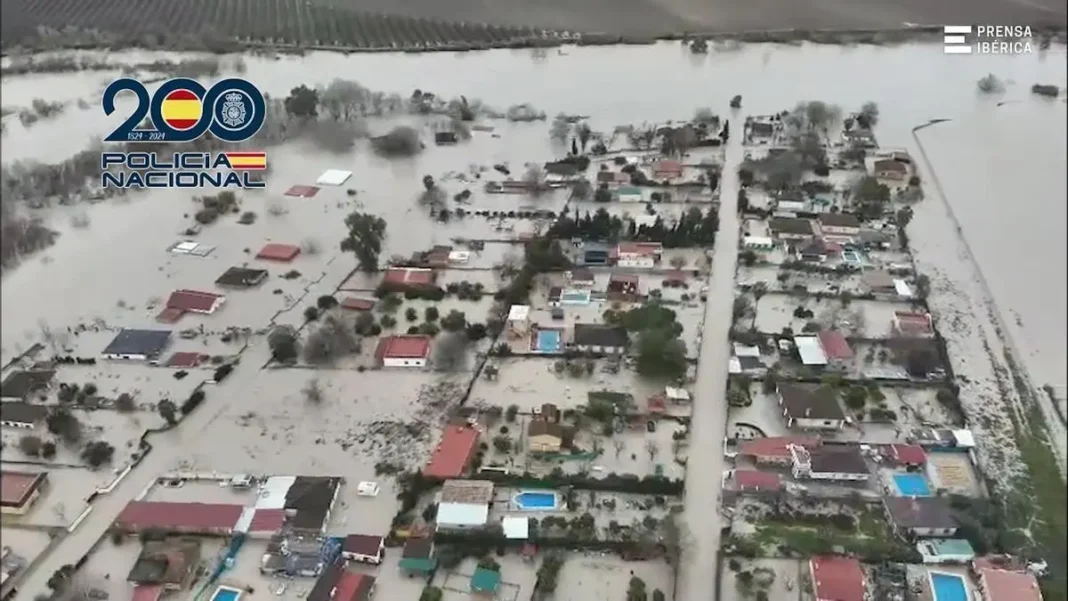
The catastrophic passage of Storm Leonardo through Andalusia in February 2026 has transcended the typical seasonal weather event, evolving into a full-scale humanitarian and logistical crisis. With over 8,000 residents forced into emergency shelters and the confirmation of a fatality in Sayalonga, the region is facing the brutal reality of the “new normal” in climate patterns. The death of a woman, swept away by the Turvilla River, serves as a grim reminder that the speed of modern flash floods frequently outpaces current local warning systems and civil defense protocols.
Logistical Paralysis in the South
The province of Cádiz has emerged as the epicenter of the disruption, effectively becoming a logistical island. State officials confirmed that 152 roads across Andalusia have been compromised, with 50 major arteries in Cádiz alone remains impassable. This gridlock is not merely a local inconvenience; it represents a significant fracture in the supply chains connecting Southern Spain to the rest of the European Union. In 2026, the fragility of the Iberian transport network under extreme hydro-stress has become a primary concern for Brussels and Madrid alike.
Editorial Perspectives
Preventive Mass Exodus in Jerez
In a move described by Vice President María Jesús Montero as “precautionary displacement,” nearly 3,400 people were evacuated from the city of Jerez. This massive movement of civilians reflects a shift in 2026 policy: a low tolerance for risk following the catastrophic floods of previous years. The focus remains locked on the structural integrity of the Bornos and Arcos dams. Should these reservoirs reach critical capacity, the displacement figures could double within hours, testing the limits of Spain’s national emergency response framework.
From Leonardo to Storm Martha
The respite offered by the dissipation of Storm Leonardo this Friday is a hollow one. The State Meteorological Agency (Aemet) has issued urgent bulletins for the arrival of Storm Martha on Saturday. This phenomenon—serial cyclogenesis—is the hallmark of 2026’s weather cycles. With the ground already saturated to its geological limit, Martha’s projected 150mm of rainfall will not be absorbed; it will run off. This cumulative effect turns manageable rainfall into destructive torrents, threatening to bury towns like Villanueva Mesía under deeper layers of silt and debris.
A Political High-Stakes Inspection
Prime Minister Pedro Sánchez’s aerial survey of the disaster zones underscores the political gravity of the situation. By labeling the coming days as “complex” and “dangerously delicate,” Sánchez is preparing the public for a prolonged state of emergency. However, beyond the rhetoric of “prudence,” the 2026 administration faces mounting pressure to overhaul the National Adaptation Plan. As the residents of Grazalema face at least another week in temporary housing, the question shifts from “when will the rain stop” to “is Southern Spain still habitable under current urban planning?”
Takeaways:
- Fatalities and mass evacuations highlight the rising intensity of Iberian storms.
- Cádiz faces a total transportation lockdown with over 50 roads closed.
- Preemptive evacuations in Jerez signal a new, zero-risk government policy.
- Storm Martha is expected to exacerbate the crisis on Saturday due to soil saturation.
Key Facts:
- A body was recovered in Sayalonga after a woman was swept away by a river.
- More than 8,000 individuals have been evacuated across Andalusia and Extremadura.
- 152 roads are currently affected by floods, landslides, or debris.
- Prime Minister Pedro Sánchez conducted a helicopter inspection of the damage.
- Aemet has issued yellow alerts for Cadiz, Jaen, Seville, and Malaga.
- Storm Martha is forecast to bring 90 km/h wind gusts to the southern coast.
- Reservoir levels at Bornos and Arcos are under 24-hour surveillance.
- In Grazalema, residents are barred from returning home until at least mid-next week.