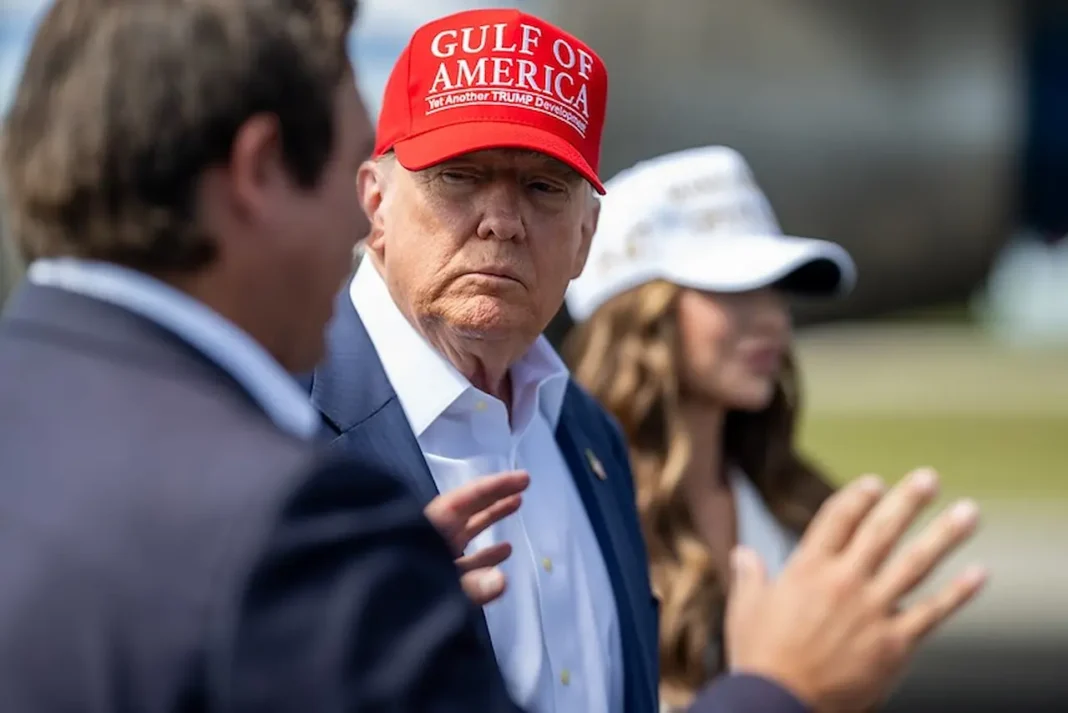

The meeting between Donald Trump and Gustavo Petro at the White House this Tuesday, February 3, 2026, transcends a mere bilateral sit-down; it is a display of cynical pragmatism on a geopolitical chessboard where ideology is but a bargaining chip. After months of aggressive rhetoric—during which Trump openly flirted with the idea of military operations on Colombian soil, evoking the ghost of Manuel Noriega’s capture or the hunt for Nicolás Maduro—the scene has shifted to “smiles and a cap.” The gift of a “Make America Great Again” hat to a former guerrilla leading Colombia is not a gesture of friendship; it is a symbol of symbolic capitulation and territorial marking. In today’s world-system, Colombia remains the epicenter of a drug war that has failed globally, now serving as a maneuverable piece for Washington’s ambitions regarding Venezuela and the control of migratory flows.
The tension over drug trafficking, the central theme of the dialogue, reveals the hypocrisy of the global machinery. Trump accuses Colombia of flooding the United States with narcotics, while ignoring that American domestic consumption is the financial lung that keeps the cartels alive. Petro, in attempting to push his “Total Peace” agenda, finds himself forced to walk on hot coals to avoid sanctions or the direct destabilization of his government. The Colombian phenomenon is a symptom of systemic social injustice: while peasants produce coca leaf due to a lack of economic alternatives imposed by the global market, the political elites in Washington and Bogotá stage a facade of harmony to satisfy Wall Street indices and border security.
Editorial Perspectives
The butterfly effect of this meeting strikes Caracas directly. The softening of Trump’s tone toward Petro could indicate a strategic realignment: the use of Colombia as a “tamed” mediator or as a more stable logistical base for future pressure against the Maduro regime. For the global citizen, what is reaffirmed is that international relations are not guided by humanistic values, but by a “Realpolitik” of the counter. If Colombia is the world’s largest producer of cocaine, it is because global demand and systemic prohibition have created a trillion-dollar market that no White House meeting, however cordial, has a real interest in extinguishing. The red cap in Petro’s hands is the receipt for a world order that demands submission in exchange for political survival.
Takeaways:
- Trump and Petro seek to reduce tension following previous threats of U.S. military intervention.
- Narcotics remain Washington’s primary pressure tool over Bogotá.
- The “MAGA” cap gift symbolizes Trump’s attempt to project influence over leftist leaders.
- The stability of this relationship directly impacts U.S. strategy toward Venezuela.
Key Verifiable Facts:
- Official meeting held on February 3, 2026, at the White House.
- Trump had previously suggested military operations within Colombian territory.
- Colombia is the world’s largest cocaine producer; the U.S. is the largest consumer.
- The meeting marks a pragmatic turn following Trump’s accusations regarding Petro’s alleged criminal ties.
- Petro accepted the “MAGA” cap as part of the diplomatic rapprochement protocol.