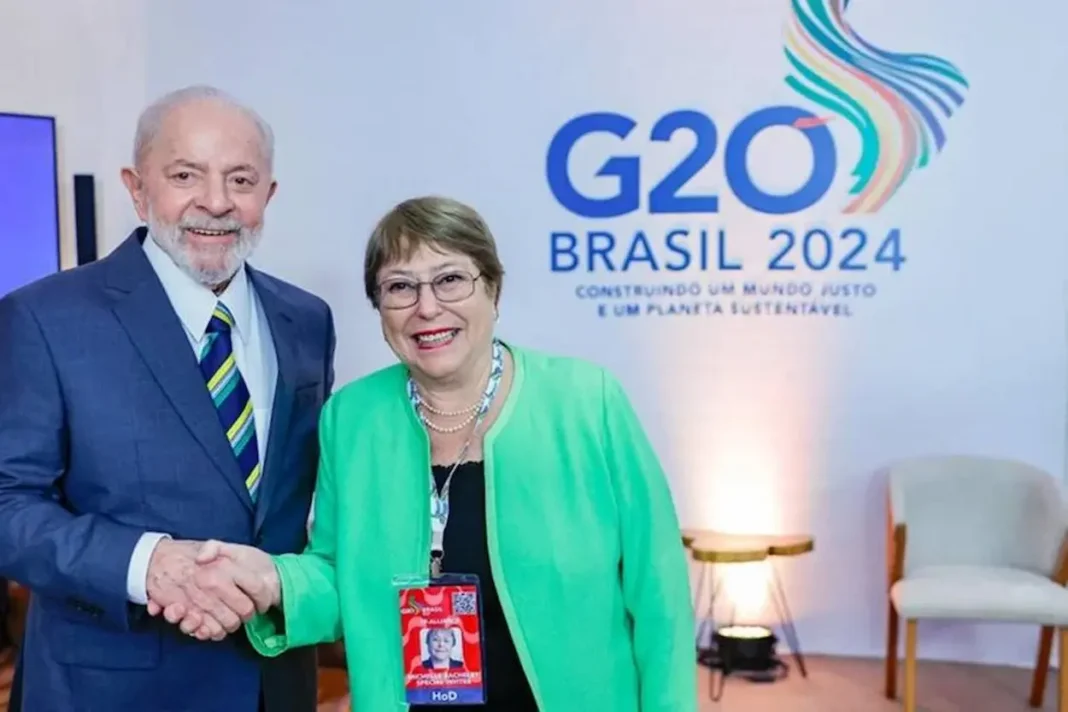

The race for the 10th Secretary-General of the United Nations has officially transformed into a unified Latin American campaign. This week, Chilean President Gabriel Boric formally registered the candidacy of Michelle Bachelet, with the powerful backing of Brazil and Mexico—the region’s largest economies. If successful in the late 2026 election, the former two-term Chilean president would take office in January 2027, shattering an 80-year glass ceiling as the first woman to lead the organization.
Breaking the 80-Year Gender Barrier
President Luiz Inácio Lula da Silva of Brazil was quick to endorse the move, stating on social media that it is finally time for a woman to hold the UN’s top job. For Brasilia, Bachelet represents more than just gender parity; she is a “triple threat” diplomat with a resume that includes the Presidency of Chile, the leadership of UN Women, and a tenure as the UN High Commissioner for Human Rights. This deep institutional knowledge is seen as vital for a leader who must navigate a global landscape currently paralyzed by the wars in Ukraine, Gaza, and Sudan.
The Looming “Financial Collapse”
The timing of this candidacy is critical. Outgoing Secretary-General António Guterres has recently issued a stark warning regarding an “imminent financial collapse” of the UN. With unpaid dues reaching a record $1.6 billion—largely owed by the United States—the organization is trapped in what Guterres calls a “Kafkaesque cycle” of debt and bureaucratic constraints. Bachelet’s supporters argue that her experience in managing complex political processes makes her uniquely qualified to implement the drastic administrative reforms needed to keep the UN solvent and relevant.
A Crowded Latin American Field
Despite the strong backing for Bachelet, she is not the only regional heavyweight in the running. The race includes Rafael Grossi, the Argentine head of the International Atomic Energy Agency (IAEA), and Rebeca Grynspan of Costa Rica, the current Secretary-General of UN Trade and Development. However, the unified endorsement from the “Leftist Axis” of Chile, Brazil, and Mexico gives Bachelet a significant advantage in the General Assembly, where Global South nations are increasingly demanding a voice that challenges the permanent veto power of the Security Council.
Analysis & Context
Reforming the Security Council
A central pillar of the Bachelet-Brazil platform is the overhaul of the UN Security Council. For years, Brazil has lobbied for a permanent seat, arguing that the 1945 power structure no longer reflects the reality of 2026. By supporting Bachelet, Lula is positioning Brazil as a key architect of a “New Multilateralism.” The goal is to move away from a system often stalemated by G7 and Chinese rivalries, toward a more representative governance model where middle powers like Brazil, India, and South Africa have a decisive say in international peace and security.
Takeaways:
- Brazil, Chile, and Mexico have formed a joint front to support Michelle Bachelet for UN Secretary-General.
- The election will take place later in 2026, with the new term starting in 2027.
- Bachelet would be the first female Secretary-General in the history of the UN.
- The organization faces a $1.6 billion budget deficit and a risk of operational collapse.
- Reform of the UN Security Council remains a top priority for the Brazilian-led coalition.
Key Facts:
- Michelle Bachelet served as UN High Commissioner for Human Rights from 2018 to 2022.
- António Guterres’ second term ends on December 31, 2026.
- The United States currently owes the UN over $2.1 billion in regular and peacekeeping dues.
- Rafael Grossi (Argentina) is currently the most prominent male challenger from the region.
- The UN Secretary-General is appointed by the General Assembly upon the recommendation of the Security Council.
- 2026 marks the 81st year of the United Nations without a female leader.