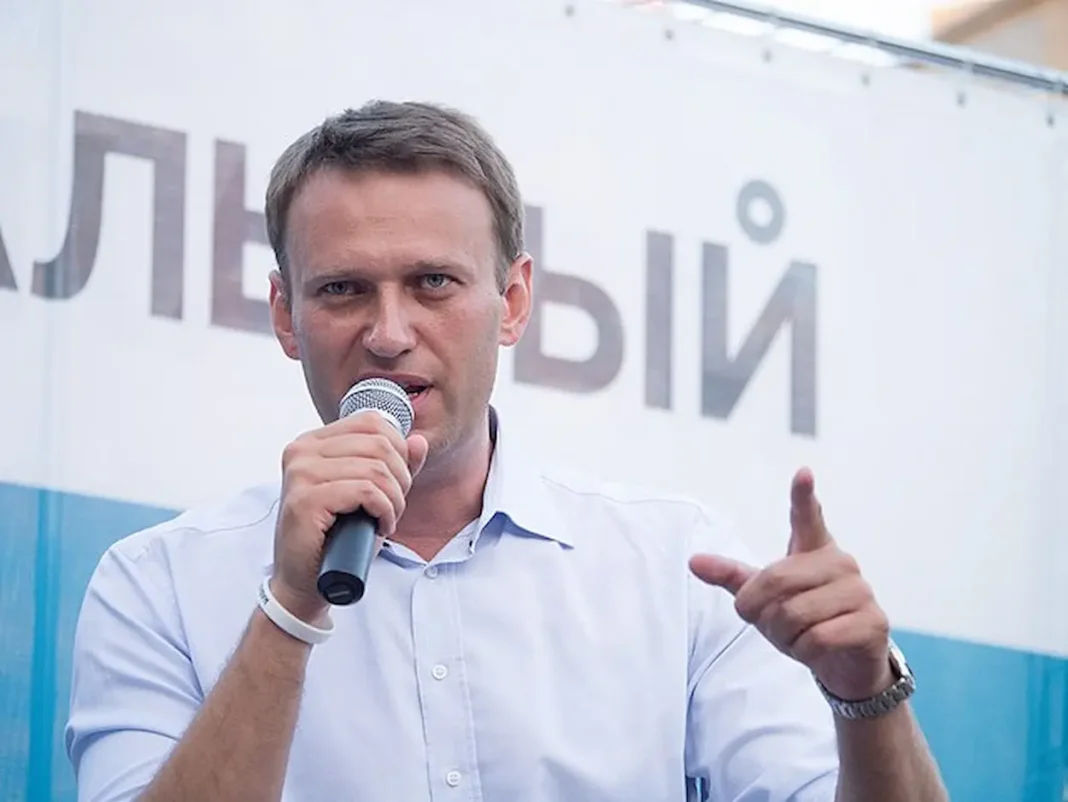

The diplomatic chasm between the Russian Federation and the European bloc widened significantly this Monday (16). The Kremlin has formally dismissed a joint investigative report signed by the United Kingdom, Germany, France, Sweden, and the Netherlands, which accuses Vladimir Putin’s government of assassinating opposition leader Alexei Navalny using epibatidine, an extremely lethal toxin derived from poison dart frogs. Moscow classified the allegations as “false and unfounded,” maintaining its narrative that Navalny’s death in an Arctic penal colony was due to natural causes unrelated to external interference.
The European report is definitive in its technical assessment, pointing out that the substance found in Navalny’s system does not occur naturally within Russian territory. This suggests a sophisticated intelligence operation with access to exotic chemical components. Navalny, who was the most prominent antagonist to the current regime, died months before a presidential election that further consolidated Putin’s grip on power. For international observers and human rights organizations, the use of such a specific and rare toxin serves as both an execution method and a grim signal of the state’s global reach and perceived impunity.
Science as a Tool for Social Justice
The discovery of epibatidine—a neurotoxin that irreversibly blocks nerve impulses—is at the heart of this new confrontation. While Russia attempts to control the narrative through systemic denial, European scientific and diplomatic bodies are utilizing forensic toxicology to seek justice for Navalny. This episode is not an isolated event; it adds to a long history of attacks on dissidents who challenge Moscow’s oligarchic power structure, reaffirming that in the current geopolitical landscape, scientific truth has become the final bulwark against authoritarianism and state-sponsored disinformation.
Repercussions and the Future of Sanctions
Moscow’s denial was expected, but the specificity of the five-nation accusation isolates Russia further on the 2026 global stage. The Navalny case has transcended domestic politics to become a universal symbol of the struggle for social justice and civil liberties under autocratic regimes. The Russian response, by rejecting forensic evidence from five major powers, deepens the diplomatic divide and is likely to trigger new rounds of economic sanctions. In a world demanding transparency, the Kremlin’s silence and denial regarding the Arctic death echo as a tacit admission that, for the current regime, opposition remains a crime punishable by death.
Analysis & Context
Takeaways:
- Russia categorically denies the murder of Alexei Navalny via exotic poisoning.
- A joint European report identifies epibatidine, a toxin non-native to Russia, in the victim’s body.
- Navalny died in a high-security Arctic prison months before the presidential elections.
- The accusation is backed by a coalition of five European powers (UK, DE, FR, SE, NL).
- The incident intensifies Moscow’s diplomatic isolation and fuels the push for new sanctions in 2026.
Key Facts:
- Date: February 16, 2026.
- Location of Death: Arctic Penal Colony, Russia.
- Alleged Substance: Epibatidine (Poison dart frog toxin).
- Accusing Countries: United Kingdom, Germany, France, Sweden, and the Netherlands.
- Official Response: Kremlin labels the report “false and unfounded.”