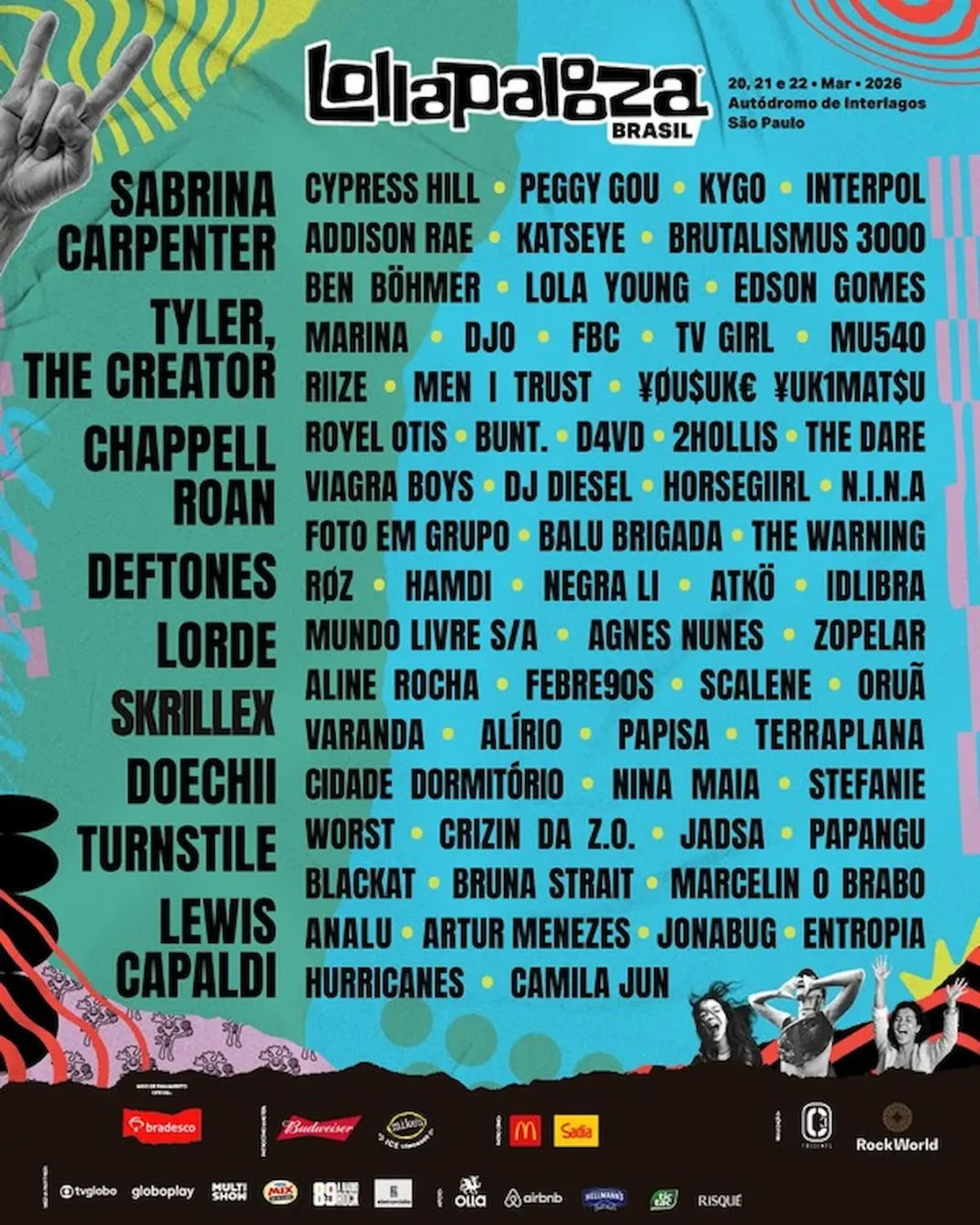

The announcement of the Lollapalooza Brazil 2026 line-up is more than a musical schedule; it is a clinical snapshot of the digital age’s “spirit of the time.” By uniting global chart-toppers like Sabrina Carpenter and Chappell Roan with alternative powerhouses like Deftones and Turnstile, the festival operates as a giant mosaic of contemporary trends.
From Brazil to the United States, the curation reflects a shift where the internet’s niche voices now share the spotlight with international franchises, creating a creative ecosystem that is increasingly less asymmetrical.
Editorial Perspectives
However, the structural costs—reaching up to R$ 5,117.00 (approx. $1,020.00) for the Lounge experience—highlight the deepening gentrification of leisure.
As Interlagos prepares to become an ephemeral city of consumption, the festival stands as a testament to the “experience economy,” where access to culture is strictly mediated by purchasing power.
The inclusion of local talents like FBC and Negra Li alongside global stars like Skrillex and Interpol strengthens the creative industry, yet it also raises questions about the sustainability of massive international franchises in emerging markets.