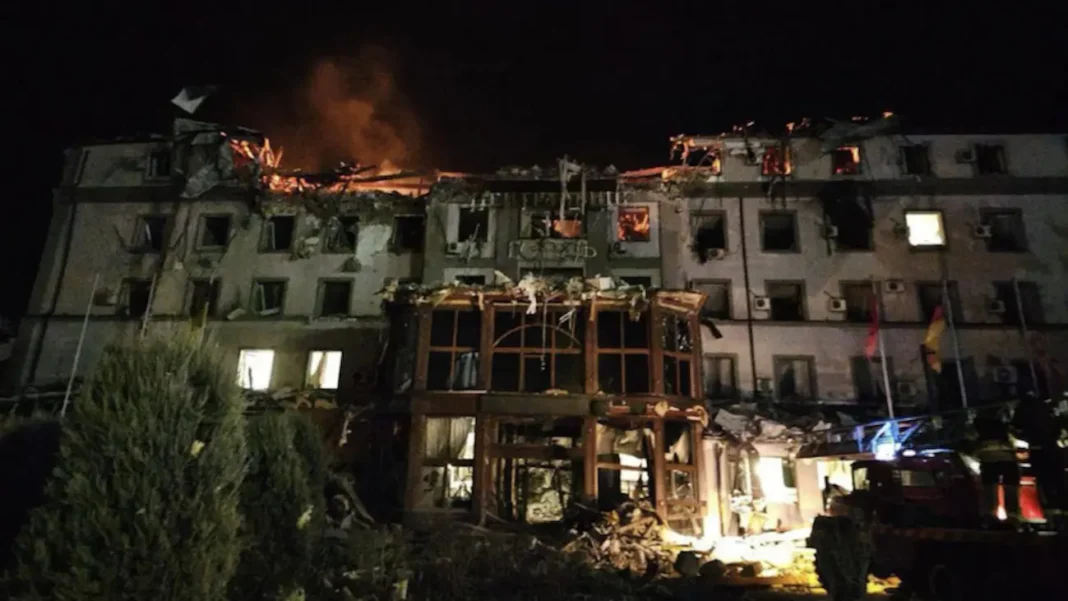

Russian artillery targeted Kherson in southern Ukraine overnight, injuring eight women in residential strikes. Regional officials reported the assault, with the State Emergency Service deploying firefighters to douse flames engulfing a direct-hit home. Released footage captures rescuers navigating debris clouds, underscoring the strikes’ calculated impact on civilian zones.
Southern front under siege
Kherson has endured over 1,200 shelling incidents since Russia’s 2022 retreat, per Ukrainian Defense Ministry logs. Positioned along the Dnipro River, it anchors Moscow’s probing assaults on supply lines. Locals endure siren-marred nights, straining makeshift shelters. This incident amplifies Russia’s attrition strategy, prioritizing homes to erode morale.
Casualties demand swift aid
The eight victims, aged 35 to 62, sustained shrapnel and burn injuries ranging from minor to severe. Three required urgent surgery at Kherson Regional Hospital. Medical teams executed high-risk extractions amid potential follow-up barrages, as volunteers rushed essentials. Governor Oleksandr Prokudin requested Kyiv reinforcements for enhanced air defenses.
US pushes Miami talks timeline
President Volodymyr Zelensky revealed Washington’s blueprint for war’s end by European summer. The Miami-hosted talks, greenlit by Kyiv, outline Ukrainian neutrality pledges and aid corridors, sidestepping annexed lands. European envoys track progress, wary of Russian rejection sparking broader clashes.
Analysis & Context
Strategic stakes in Dnipro basin
Post-2022 pullback, Kherson’s front lies 30 km distant, yet nightly fire seeks to sever Ukrainian logistics. Paired with Iranian Shahed drones, these ops sync with Donbas pushes. Experts forecast spring surges, countered by Ukraine’s ATACMS strikes on rear depots.
Humanitarian crisis deepens
Over 70,000 displaced since January, the area grapples with power and water shortages. Red Cross ramps aid, but Russian cordons hinder flows. UN warns of seasonal famine risks, with 2026 harvests imperiled by uncleared mines. Women spearhead community resilience networks.