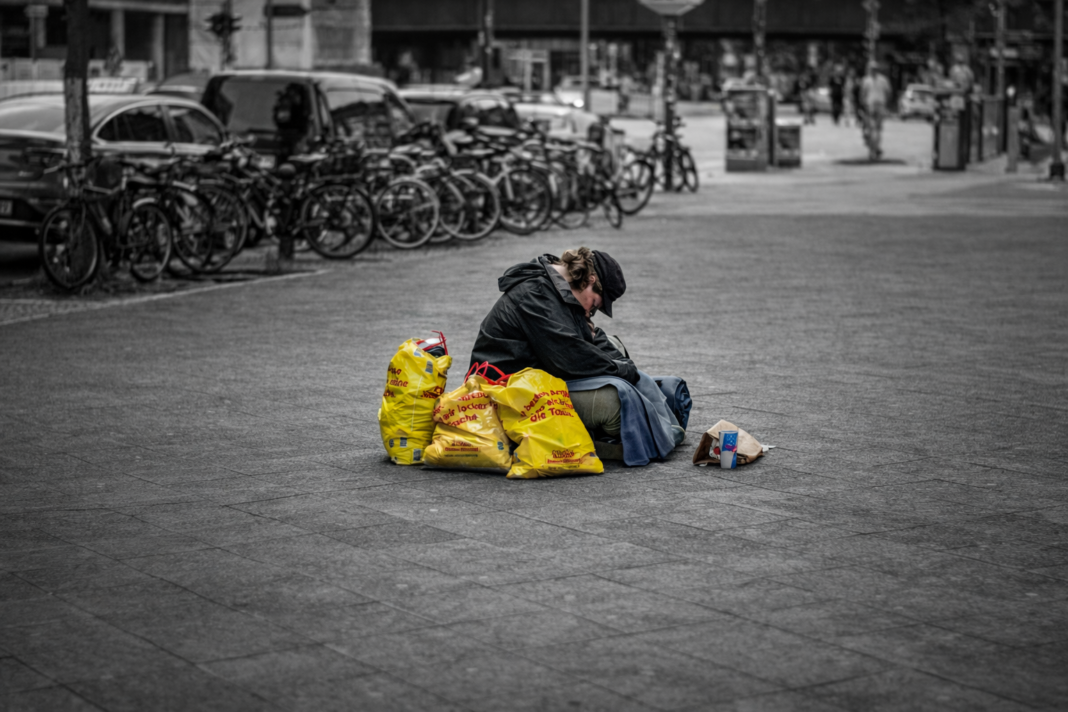

Germany, historically constructed as the bastion of economic stability and the “safe haven” of the Eurozone, faces in 2026 a somber mirroring of the inequality crises that typically plague the Global South. Data from the Federal Statistical Office (Destatis) reveals that poverty has ensnared 13.3 million people, or 16.1% of the population.
This phenomenon, though interpreted locally as a consequence of inflation and housing costs, must be viewed through the lens of global political macroeconomics as the exhaustion of the Welfare State model in the face of predatory global financialization. Germany is not merely becoming “poorer”; it is succumbing to the same logic of precarization that dismantled peripheral economies in previous decades.
Editorial Perspectives
The poverty threshold—set at 1,446 euros for single individuals—is a metric that masks a devastating human reality. When an industrial superpower sees its citizens scavenging for recyclables to survive, the signal sent to the world is that GDP growth has become permanently decoupled from human dignity.
The 2022 invasion of Ukraine by Russia acted as a catalyst, but the pathology is structural: energy dependence and manufacturing exports were prioritized over internal social resilience.
The surge in poverty among foreigners (32.5%) and single parents (28.7%) exposes the xenophobic and patriarchal undercurrents of the crisis, where historically marginalized groups are the first to be expelled by the system when the gears of capital slow down.
Globally, the German situation is the “canary in the coal mine” for liberal democracies. If the country with the largest trade surplus in Europe cannot protect a fifth of its population from food and energy vulnerability, the very concept of “development” requires urgent renegotiation in forums such as the G20 and the IMF. The political resistance to taxing large fortunes, highlighted by social welfare organizations, is not a Berlin eccentricity; it is the dogma of transnational capital that prevents wealth redistribution from New York to Tokyo.
What we observe on the streets of Berlin today is the prelude to an instability that feeds political extremism, proving that economic injustice is the primary fuel for democratic erosion on a planetary scale. The fall of the German welfare tree will make the soil of the entire European Union tremble.
In a world where the United States, China, and the European Union compete for technological hegemony, the domestic neglect of the German population suggests that the “Green Transition” and military rearmament are being financed by the direct impoverishment of the working class.
The humanitarian impact is not confined to borders; as the German consumer market shrinks, exporters from Brazil, Morocco, and India feel the ripple effect. Poverty in Germany is, therefore, a global macroeconomic symptom: a warning that the neoliberal architecture of the 21st century is structurally incapable of maintaining peace through prosperity.